

How Many Juices Per Day on a Juice Fast?
A workable baseline for a successful juice fast is 4–6 juices per day, spaced evenly, with 16–20 oz per serving. That range keeps energy steady without pushing calories high enough to stall fat loss — as long as the juices are mostly vegetables and total intake stays controlled. That equals roughly 64–120 oz per day depending on whether you’re at four or six servings.
Running the day on two oversized juices creates long gaps and sharp hunger swings. Sipping eight or nine fruit-heavy juices keeps the stomach full but pushes calories high enough to slow fat loss. The right number is the one that keeps your energy even and your appetite manageable without drifting past your calorie target.
You may notice that the most difficult stretch is not the juice itself but the gap between servings. Why does one schedule feel manageable while another falls apart by mid-afternoon?
Direct answer: how many juices per day works best
For most people pursuing juice fasting for weight loss, 4–6 juices per day is the optimal range. A plan with four juices works best for larger, vegetable-heavy servings, while six juices are better if you prefer smaller portions spaced closer together.
Three juices per day is a low-intake approach. It increases the chance of headaches, sleep disruption, and late-day overeating. Drinking seven or more juices a day is a high-volume strategy. It can feel comfortable, but total calories rise quickly unless recipes stay low in calories and vegetable-heavy.
Juice frequency: why the number matters
Here’s the practical trade-off:
- Fewer servings: Larger gaps, sharper hunger spikes, higher risk of overeating later.
- More servings: Smoother energy, but calories increase without you realising.
- Even spacing: Steadier appetite and and helps you avoid making impulsive choices.
Adding more servings only works if the ingredients are right and your total volume stays within the limit.
Volume per serving: what 16–20 oz actually means in practice
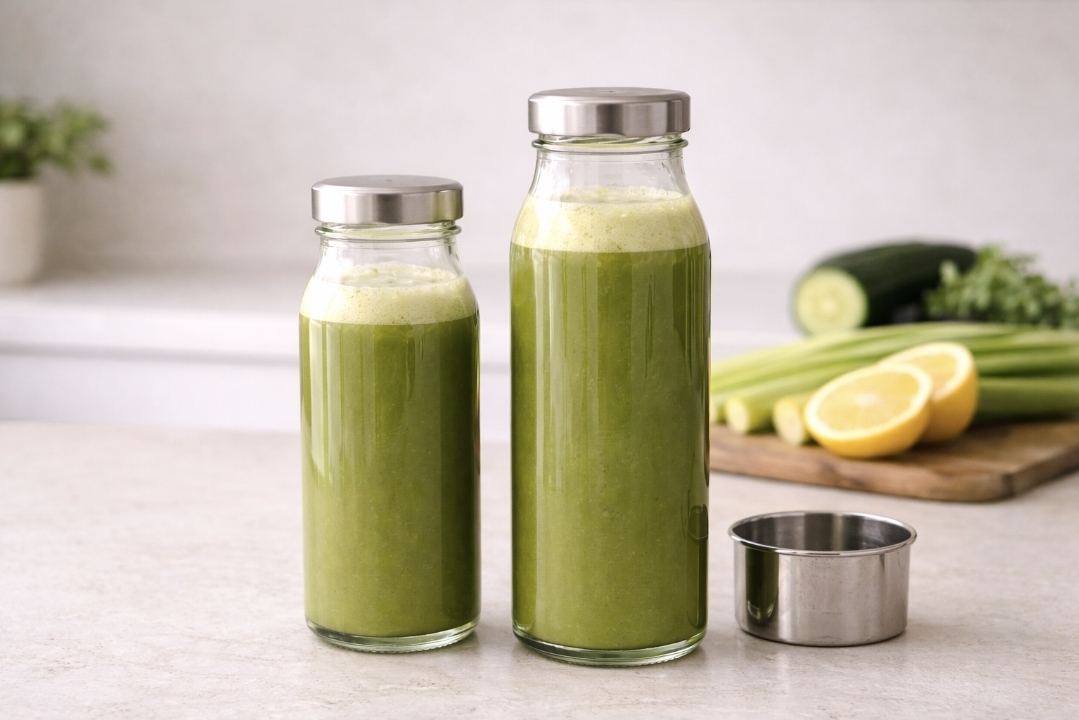
The 16–20 oz serving range works because it feels substantial without overloading the stomach. A small 8–10 oz glass is drank quickly, and leaves hunger unresolved. Starting with a massive 24–32 oz bottle front-loads your intake and throws off the timing for the rest of your servings.
Measured servings create discipline. Guessing volume leads to under-drinking during busy hours and overcompensating at night.
Daily calorie ranges by body size
At the end of the day, it’s still about the calories. Intake too low produces fatigue and sleep disturbance. Intake too high flattens fat loss.
- Smaller frame: 900–1,100 calories per day
- Average adult: 1,100–1,300 calories per day
- Larger frame / active job: 1,300–1,500 calories per day
These ranges assume vegetable-forward juice and consistent juice spacing. If daily calorie intake climbs above your intended range, fat loss slows.
Juice composition: vegetable-forward vs fruit-heavy
A vegetable-dominant plan behaves differently than a fruit-heavy one. Fruit-heavy days feel easy at first but keep appetite activated. Days focused on vegetables are more stable and less of a rollercoaster.
A practical structure is 70–80% vegetables and 20–30% fruit across the day. Use fruit for taste, not as the base of every juice.
Carrots and beets increase sweetness quickly – use them for flavor instead of making them the bulk of the drink.
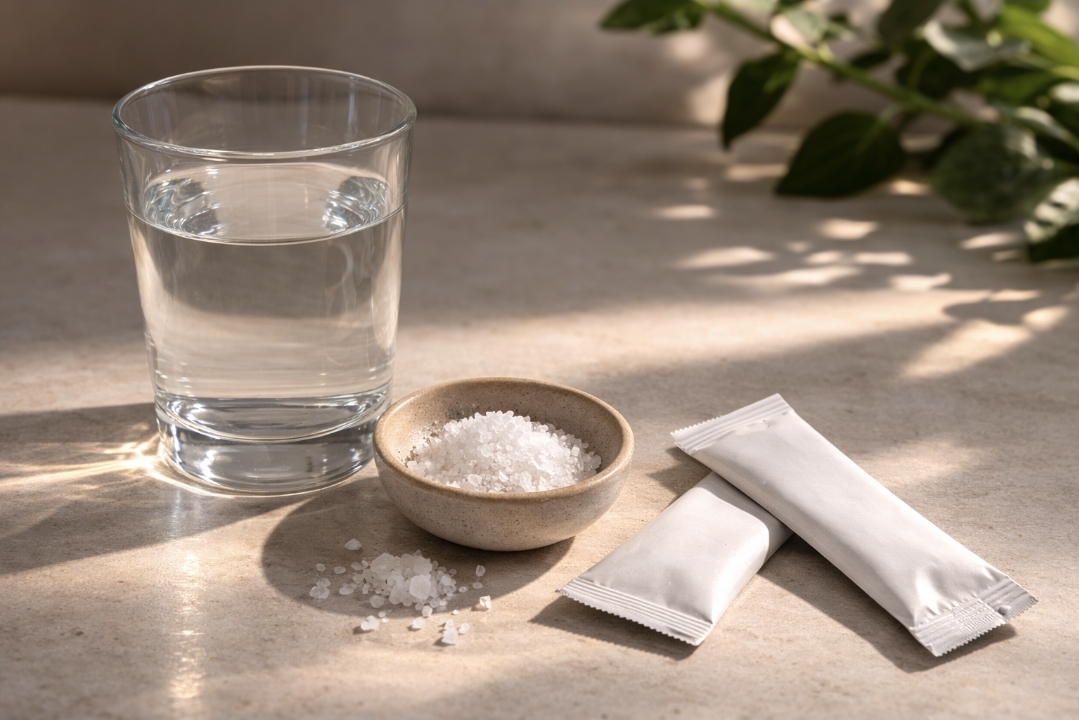
Electrolytes: the part people underestimate
When food is low, water intake is high, and sodium is low, blood sodium levels drop. That’s when symptoms like headache, dizziness, nausea, and confusion can appear. Mayo Clinic lists these among the common signs of hyponatremia. Mayo Clinic
A practical sodium target during a juice fast is 1–2 grams per day. Under 1 gram per day, symptoms rise quickly; if you push sodium excessively high you’ll notice swelling or persistent thirst.
Low sodium usually shows up the same way — an afternoon headache, lightheadedness, or irritability.
Spacing: how far apart should juices be?
A simple four-serving example:
- 9:00 am
- 12:30 pm
- 4:00 pm
- 7:30 pm
Add a fifth serving when work hours extend or level of activity rises. Being steady is more important than just doing the bare minimum.
Signs your intake is too low
A low-intake day looks unstable rather than disciplined.
- Dizziness when standing up
- Headaches that persist despite drinking water
- Early waking with difficulty returning to sleep
- Cold hands and reduced motivation
- Late night intense cravings
If you’re still feeling shaky even after taking enough salt, you’re probably just not drinking enough calories.
Signs your intake is too high
If you’re drinking too much juice, you’ll feel full all day without ever really getting hungry.
- No clear hunger window between servings
- Fruit-heavy juices becoming the go to
- Drinking outside the planned schedule
- Body measurements unchanged across several days
- Late-evening volume disrupting sleep
Feeling comfortable all day doesn’t necessarily mean the plan is working.
Safety considerations
Medication and medical history alter fasting safety. Diabetes medications increase hypoglycemia risk when daily calories drop. Blood pressure medications and diuretics increase dizziness risk when fluids and sodium levels shift.
Kidney disease changes fluid tolerance. Eating disorder history increases relapse risk. Pregnancy and breastfeeding are not appropriate times for fasting of any kind.
Confusion, chest pain, fainting, or persistent vomiting require immediate cessation and medical evaluation.
Extra gear and handy tips (strictly optional).
FAQ
Is 4 juices per day enough on a juice fast?
Four juices work when servings are adequate in size and vegetable-forward. Access volume or excessive fruit leads to hunger spikes and late-day juicing over the recommended levels. Adjust length of time before adding sweetness.
Should I drink juice every 2 hours?
How do electrolytes change how many juices I need?
Electrolytes stabilize fluid balance. Low sodium combined with high water intake produces symptoms that mimic under-eating. Correct sodium first before increasing juice volume.
Does higher protein keep you full compared with lower protein?
Higher-protein diets have been shown in controlled trials to increase satiety and reduce subsequent intake compared with lower-protein diets. A systematic review published in the American Journal of Clinical Nutrition found consistent benefits from increased protein intake while fasting. PubMed
Why does weight change quickly in the first days?
Stored glycogen binds water. For each gram of glycogen stored, approximately 3–4 grams of water are stored alongside it, which explains rapid weight shifts when carbohydrate intake changes. This relationship is well documented in exercise physiology literature. PubMed
Closing guidance
Drinking four to six juices a day—about 16–20 oz each—every 2.5 to 4 hours gives you a solid baseline. Focus on vegetable-heavy blends and keep your salt levels steady to make the day feel easier.
What matters is how the juicing plan holds up over several days, not whether one day felt perfect. When you nail your timing, your portions, and your salt intake, the fast just feels like a normal routine instead of a big deal.