
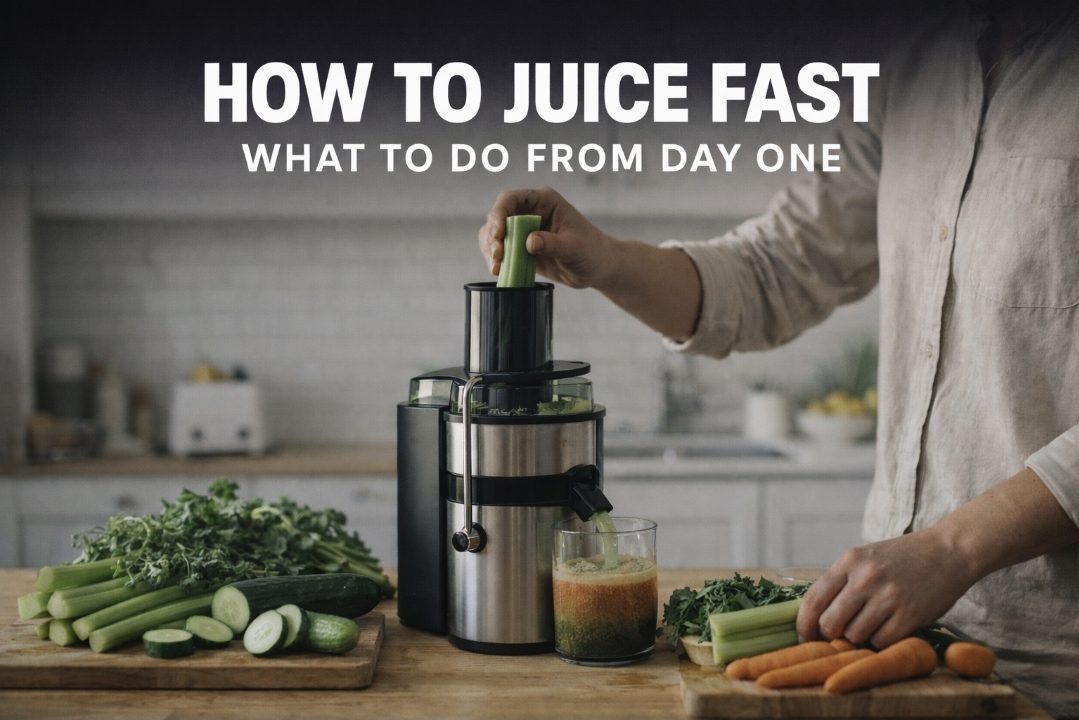
How to Juice Fast
Juice fasting is simple on paper and easy to get wrong in practice. Most people don’t struggle because it’s difficult — they struggle because the setup is off from the start.
This guide shows you exactly how to do it properly. What to drink, when to drink, and how to get through the first few days without burning out or second-guessing everything.
Follow this as it’s written. Don’t overcomplicate it, and don’t change things mid-way.
What Juice Fasting Actually Means
Juice fasting means removing solid food for a set period and replacing it with fresh vegetable and fruit juice. You’re not buying packaged drinks or following complicated recipes — you’re drinking fresh juice throughout the day instead of eating meals.
The goal is to simplify your intake and give your body a break from constant digestion while still getting nutrients. Keep it simple and repeatable.
Before You Start
If you’re new, keep it short. Three days is enough to see how your body responds without turning the fast into a test of willpower. Starting longer usually leads to early burnout, not better results.
Buy your produce in advance and keep it basic. Leafy greens, cucumber, celery, carrots, and a small amount of fruit are enough. Make sure your juicer is clean and easy to use so you don’t delay your first juice.
Pick a time window that’s predictable. Midweek works better than weekends because there are fewer social interruptions. Expect the first couple of days to feel off — hunger, cravings, and lower energy are part of the adjustment.
Important: If you have any medical condition or are unsure, speak to your doctor before starting.
Before you start, fix the mistakes that make most people quit early: Mistakes to Avoid
How to Juice Fast
Step 1: Prepare properly
Set your fast length before you begin. Three days is enough for most people starting out. Buy enough produce to cover the full period so you’re not making decisions when you’re already hungry.
Keep everything easy to access and ready to use. Have a simple plan for when you’ll drink your juices — morning, midday, afternoon, evening — nothing complicated, just consistent.
Remove obvious friction. If junk food is in front of you or your juicer is difficult to use, you’re making the process harder than it needs to be.
Step 2: Your first day
The first day follows your normal routine more than you expect. Hunger shows up at usual meal times, even without food, and most of the challenge is mental rather than physical.
Start early and drink your first juice before hunger builds. Drink whenever hunger appears instead of waiting, as delays turn manageable hunger into cravings and irritability.
You’ll think about food more than you actually need it. Keep intake steady and avoid treating the day like a test.
If this already feels harder than expected, don’t guess your way through it: Fix the common mistakes here
Step 3: Days 2–3
This is where the fast starts to feel different. Energy can dip, patience drops, and cravings become more specific. Keep intake steady and respond quickly — if energy drops or you feel flat, check when you last had juice and drink again.
Hunger shifts from routine-based to wave-based. It comes and goes rather than following the clock. Evenings tend to feel harder because routine and habit push back more than actual hunger.
Keep juice ready ahead of time, especially later in the day. Gaps in intake are what turn a manageable fast into a difficult one.
Step 4: Continuing the fast
Once you move past the first few days, the fast becomes more stable. Hunger is less aggressive and the routine settles into something predictable.
If things feel steady, keep everything the same. Don’t change intake, timing, or ingredients just because it feels easier. Consistency is what keeps the fast working.
If energy drops and doesn’t improve after drinking more juice, stop. That’s a clear signal to reassess rather than push through.
What a Day Looks Like
Morning: Start with your first juice early. Hunger is lighter here, so it’s easier to stay ahead of it.
Midday: Hunger builds more from habit than need. Drink another juice instead of trying to ignore it.
Afternoon: Energy can dip. This is where people start questioning the fast. Usually, it’s just a signal to drink again.
Evening: Routine becomes the challenge. Food habits show up more than physical hunger. Keep juice ready and avoid long gaps.
If you’re unsure whether what you’re feeling is normal: See what actually happens day by day
What to Drink
Fresh juice is essential. Store-bought options are processed, high in sugar, and not suitable for fasting. Vegetable-based juices should make up most of your intake, using greens, cucumber, celery, and carrots as a base.
Fruit can be added in small amounts for taste, but too much creates unstable energy and stronger hunger swings. Keep combinations simple and repeatable rather than constantly changing ingredients.
Aim for 4–5 servings per day and drink based on hunger rather than a strict schedule. Drink water alongside your juice, as dehydration makes the entire experience harder.
Common Mistakes
- Starting too long → leads to early burnout and quitting
- Drinking too little juice → causes low energy and stronger cravings
- Using too much fruit → creates unstable energy and hunger spikes
- Relying on store-bought juice → too much sugar, not enough support
- Waiting too long between juices → turns manageable hunger into a bad day
- Changing approach constantly → makes consistency difficult
How You’ll Feel
The first few days feel uneven. Low energy, headaches, and cravings are common, especially if you’re coming off caffeine or sugar. Hunger stays manageable if intake is steady, but cravings tend to be the bigger challenge.
Around late afternoon, you may feel flat and start questioning whether to continue. That point is more about routine disruption than actual need for food.
After the early phase, energy often becomes more even and predictable. If something feels off beyond normal adjustment, don’t ignore it.
For a clearer breakdown of how this unfolds, see Results and Expectations.
What to Do If Something Feels Off
Not every part of a juice fast feels smooth, especially in the first few days. The key is knowing what’s normal and what needs adjusting.
If your energy drops, check your intake first. Most of the time, low energy comes from not drinking enough. Have another juice and give it time before assuming something is wrong.
If hunger feels constant, you’re likely spacing juices too far apart. Drink sooner. Waiting makes the day harder.
If you feel lightheaded, sit, hydrate, and have juice. If it doesn’t improve, stop the fast. Don’t push through it.
Who Should Not Do This
Juice fasting isn’t suitable for everyone. If you fall into one of these categories, don’t start without proper guidance.
- Pregnant or breastfeeding
- Underweight or recovering from disordered eating
- Managing blood sugar conditions
- Taking medication that requires food
- Dealing with ongoing medical conditions
If you’re unsure, speak to a professional before starting.
How to Know It’s Working
One of the biggest reasons people stop early is uncertainty. If you don’t know what progress looks like, it’s easy to assume something isn’t working.
Early on, progress isn’t dramatic. The first couple of days can feel uneven, and that’s part of the process.
Signs things are moving in the right direction include more stable energy, less constant hunger, and a more predictable daily rhythm.
If each day feels slightly easier than the last, you’re moving in the right direction.
How to Break Your Fast
Coming off the fast needs to be gradual. Jumping straight into heavy meals usually leads to discomfort and undoes progress quickly.
Start with simple foods like fruits, vegetables, and light soups for a couple of days, then build back up slowly. Avoid large portions and processed food early on.
If you’re reintroducing meat, start with lighter options like fish before moving back to heavier meals. This step matters just as much as the fast itself.
Next Step
If you’re new, start here first:
Mistakes to Avoid
If your goal is fat loss:
Weight Loss
If you want to understand what’s happening as you go:
Results and Expectations
Don’t try to read everything. Pick one path and follow it.